Dagdya · Leadership and Governance
In Badlaav’s CCIs, they do. Dagdya is a child-led governance system
modelled on India’s parliamentary democracy. The children do not
simulate leadership. They practise it.
Why governance matters here
Child Care Institutions in India are built to provide safety, shelter, and basic education. They do this well. But there is a design gap that almost every CCI shares: children are cared for, but they are not governing anything. Every decision (from what is cooked, to when lights go off, to how events are run) is made by adults.
The result is a generation of children who leave the system knowing how to follow rules. Not how to make them. Not how to lead. Not how to take responsibility for the people around them.
“Dagdya turns the question from ‘Who will fix this?’ to ‘What can I do about it?’ That shift in framing is the entire programme.”
Dagdya is Badlaav’s answer to this gap. It does not add governance as an activity on top of CCI life. It puts governance at the centre of it, as the structure through which children experience what it means to lead, represent, organise, and be accountable to their peers.
The context before Dagdya
Decisions were made by adults. Children participated in institutional life, but had no formal mechanism to propose, challenge, or lead anything.
Events were run by staff. Festivals, competitions, and celebrations were organised for children, not by them. Children were the audience.
Problems went unvoiced. Without a formal structure for children to raise issues, concerns either went up informally through individual staff relationships, or they did not go up at all.
Leadership was informal. Some children naturally emerged as leaders. Without a system to recognise and develop them, that potential was left to chance.
Note: This reflects a structural design problem common to CCIs nationwide, not a criticism of any individual staff member or institution.
Bal Sabha · बाल सभा
The Bal Sabha is structured like the Indian parliamentary system. Seven ministerial verticals cover every dimension of life inside the CCI. A President and Vice President sit above the council. Every role is elected. Every minister is accountable to her peers.
Oversees academic support, study routines, and educational initiatives. Represents children’s learning needs and coordinates with facilitators.
Focused on personal development, life skills that help children grow as individuals. Advocates for structure and consistency within the CCI.
Plans and leads the Annual Sports Competition. Coordinates sports activities, inter-house events, and manages team formations across all four houses.
Monitors health and hygiene, advocates for medical needs, and organises wellness activities including Yoga Day and health awareness initiatives.
Child rights, rules, and fair treatment within the institution. Ensures that every child’s voice is heard and that the system operates with integrity.
Organises the Annual Cultural Competition, festivals, birthdays, and every celebration in the CCI calendar. The Cultural Minister owns the joy of the home.
Digital literacy, Computer Club coordination, and ensuring children gets opportunity to learn and understand technology as a tool for their own future, not just a subject.
Elected position
Elected position
The President and Vice President oversee the entire council. They mediate between ministries, represent the student body to CCI staff, and are accountable to the full council and not to Badlaav alone.
How the council is formed
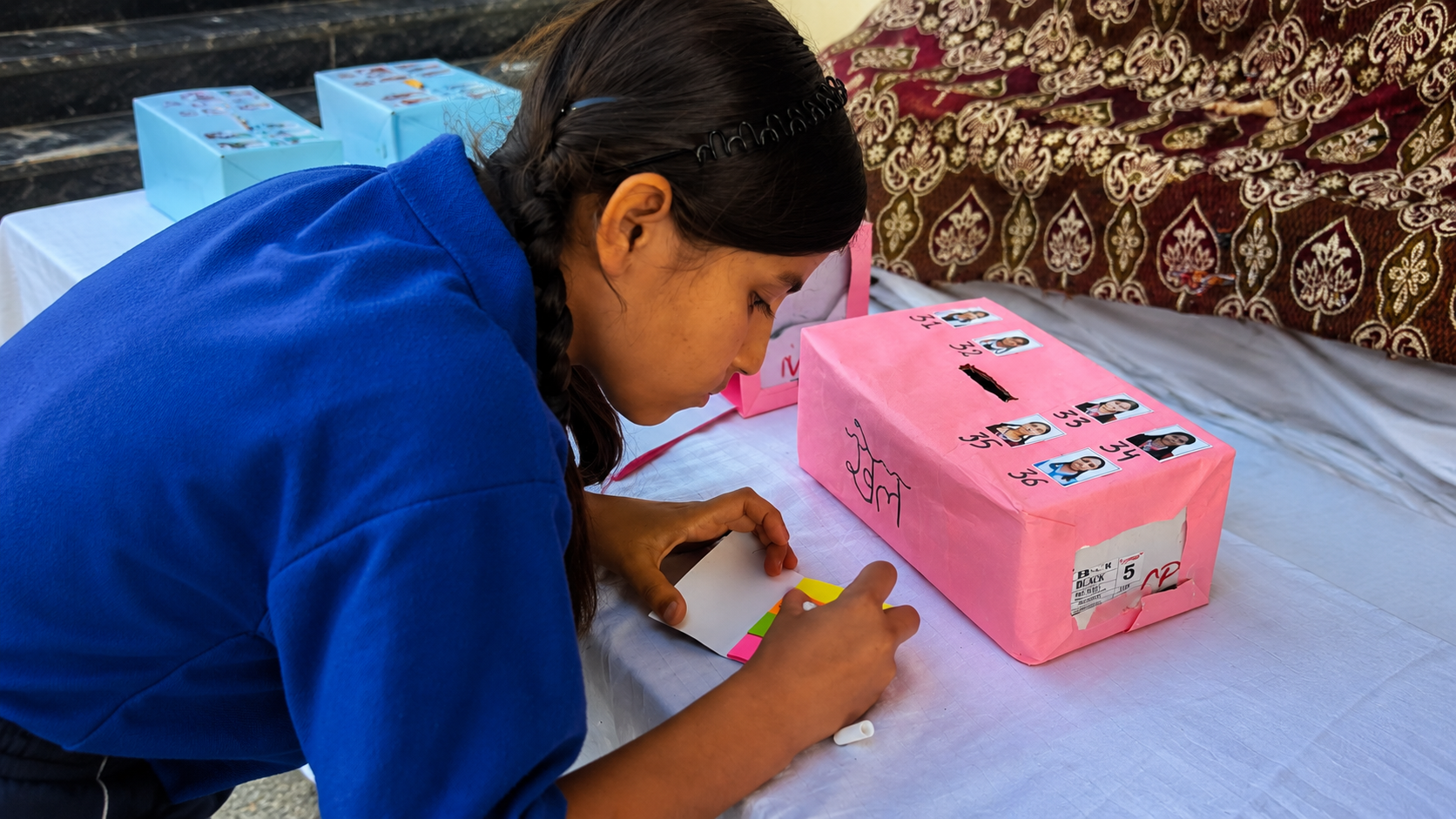
The Bal Sabha election is a genuine democratic exercise. Every step, from the first
nomination to the final vote count, is run by the children themselves, with Badlaav playing a
supporting role and not a directing one.
1
Any eligible child can put forward her own name by completing a detailed nomination form. She writes why she wants the role, what she hopes to achieve, and what she has already done. It is their first exposure to the idea of a CV.
2
Nominees go through a screening process to assess their understanding of the ministry they want to lead and their intent for their term.
3
Candidates campaign to their peers. They make promises about what they will do. They are judged on those promises by the children, not by adults.
A secret ballot. Every child votes. The process mirrors India’s democratic system, because it is modelled directly on it.
The elected council takes office. Ministers begin proposing and leading initiatives. The term runs for one academic year.
The four houses
Every child in the Bal Sabha belongs to a house. The four houses are named after iconic women from Uttarakhand: leaders, fighters, and legends who represent the very qualities Dagdya is trying to build. Every competition is an inter-house event. House colours are worn with pride.
गौरा देवी
Chipko Movement Leader
Led the Chipko movement in 1974 in Reni village, hugging trees to prevent their felling. Her act of courage sparked an environmental movement that changed forest policy across India. She showed that ordinary women could stop institutional power with nothing but their bodies and their conviction.
बछेंद्री पाल
First Indian Woman to Summit Everest
On 23 May 1984, Bachendri Pal became the first Indian woman to summit Mount Everest. From Nakuri village in Uttarkashi, she defied societal expectations and family resistance to pursue mountaineering. She proved that geography and gender were not absolute limits; they were just starting conditions.
तीलू रौतेली
Warrior Queen of Garhwal
A legendary warrior from 18th-century Garhwal who fought against Rohilla invaders with extraordinary courage. Tilu Rauteli is one of the most revered folk heroines of Uttarakhand, a young woman who took up arms and refused to yield. Her name is synonymous with fearlessness and resistance.
बसंती बिष्ट
Folk Singer · Cultural Icon
Celebrated folk singer and cultural ambassador of Uttarakhand, known for preserving and popularising the Jagar, devotional folk songs that are an intrinsic part of Uttarakhand’s cultural identity. She used her voice not just to perform, but to carry an entire culture forward for future generations.
Annual
Sports
Competition
Student-led event · Dagdya Programme
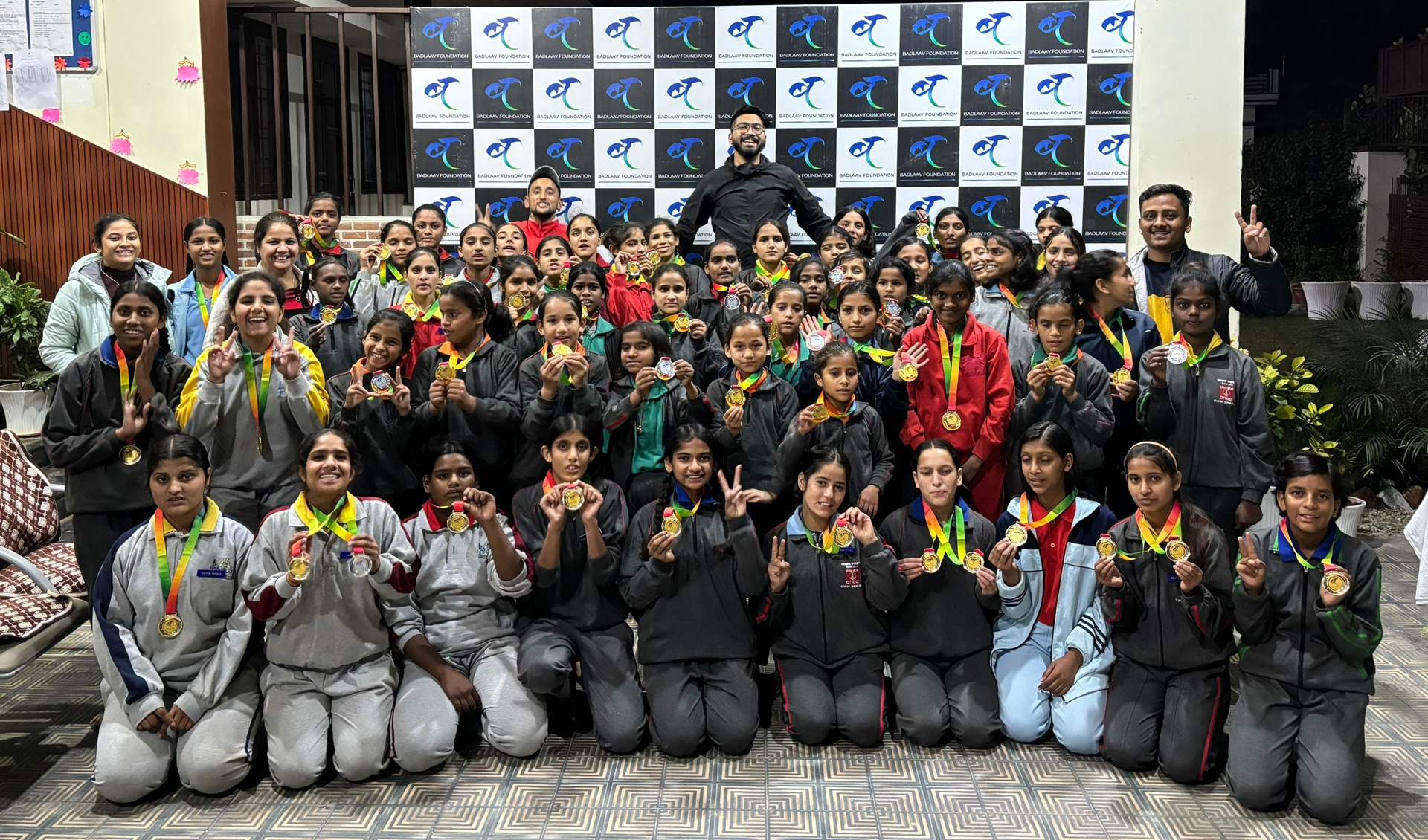
Before Dagdya, sports events at the CCI were organised by staff or external volunteers. The children showed up and participated. Since the introduction of the Bal Sabha, the Sports Minister has taken ownership of the entire event: logistics, team formations, scheduling, and the day’s running order. Badlaav steps in only where the children need support, not where they need replacing.
The event is open to every girl from Class 1 to 12. It runs as an inter-house competition, with four houses competing for the sports trophy. The day ends with medals, trophies, and the particular kind of joy that comes from being celebrated as a champion, not as someone who needed a chance.
Student-led event · Dagdya Programme
The Annual Literary Competition at Badlaav is not about correct sentences. It is about the experience of being asked, perhaps for the first time, what you think, what you feel, and what you want to say. It is about the stage and the mic, and the particular shift that happens in a child when she realises that her words matter.
Open to every girl from Class 1 to 12. The range of activities is deliberately wide, so that every kind of child with every kind of voice can find a doorway in. Essay writing sits alongside rap. Debates sit alongside visual design. This is not a competition for the already-confident. It is the process through which confidence is built.
Student-led event · Dagdya Programme
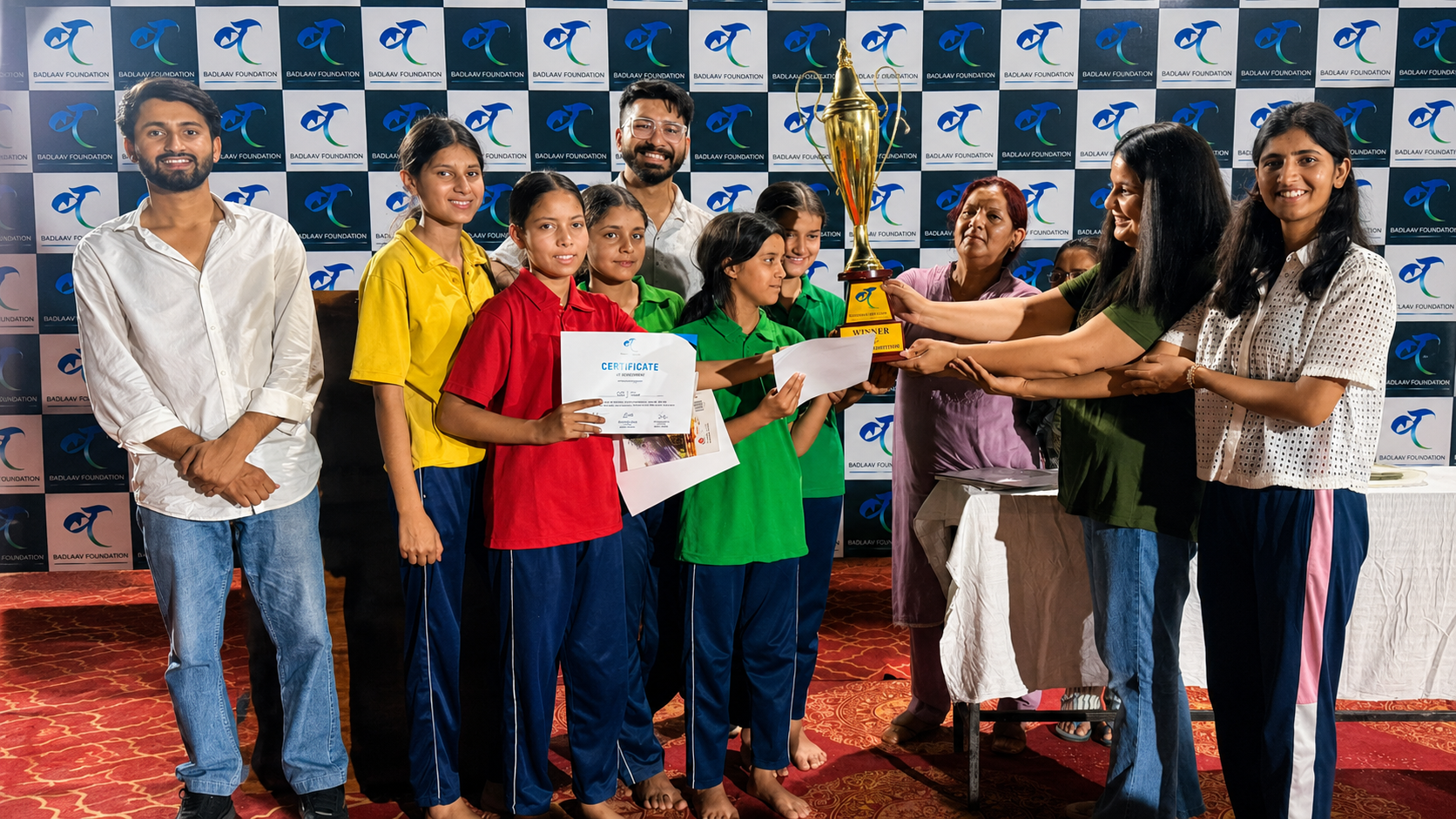
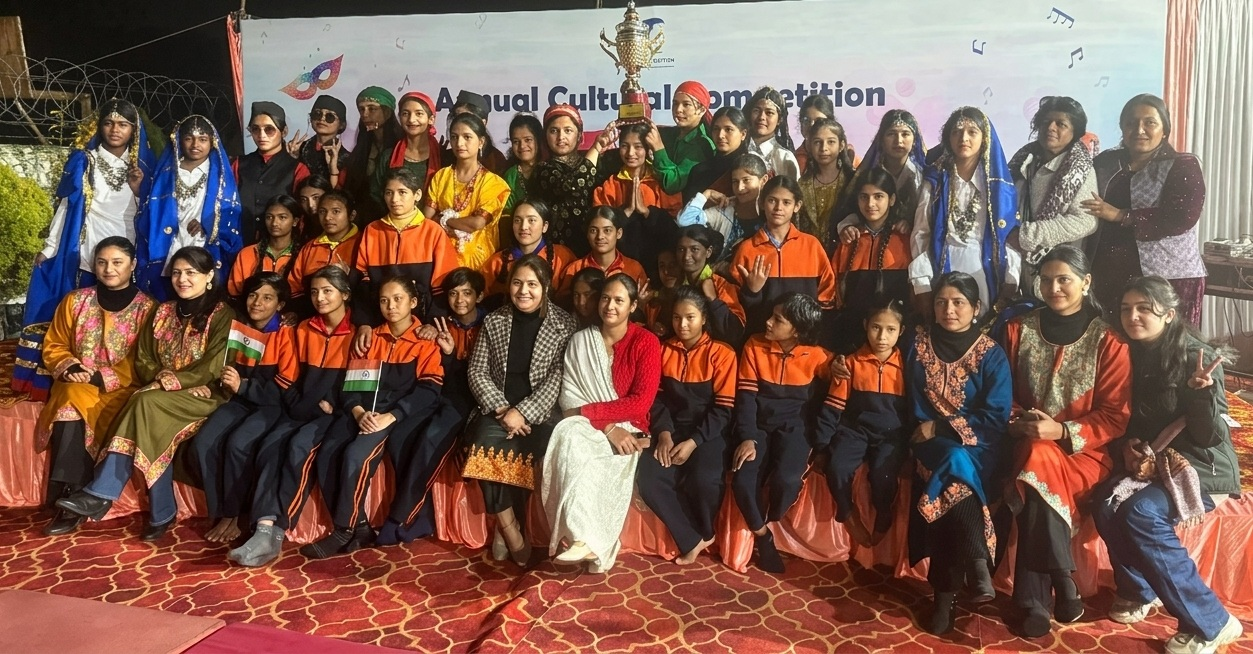
The Annual Cultural Competition is the biggest day in the Badlaav calendar. Every girl from Class 1 to 12 performs. The Cultural Minister leads the entire event with support from the full student council. Staff, peers, and external guests gather to watch a day of colour, energy, and performance: folk dances, group songs, solo pieces, original rap, drama, and skits.
This year the event has become an inter-house competition, with four houses competing for the cultural trophy. The preparation begins weeks before. Children find music, create choreography, design costumes, and practise in their own time. For many, this is the first time they have stood in a spotlight, not as background figures, but as performers with something to say and someone to represent.
Student-led event · Dagdya Programme · A first of its kind
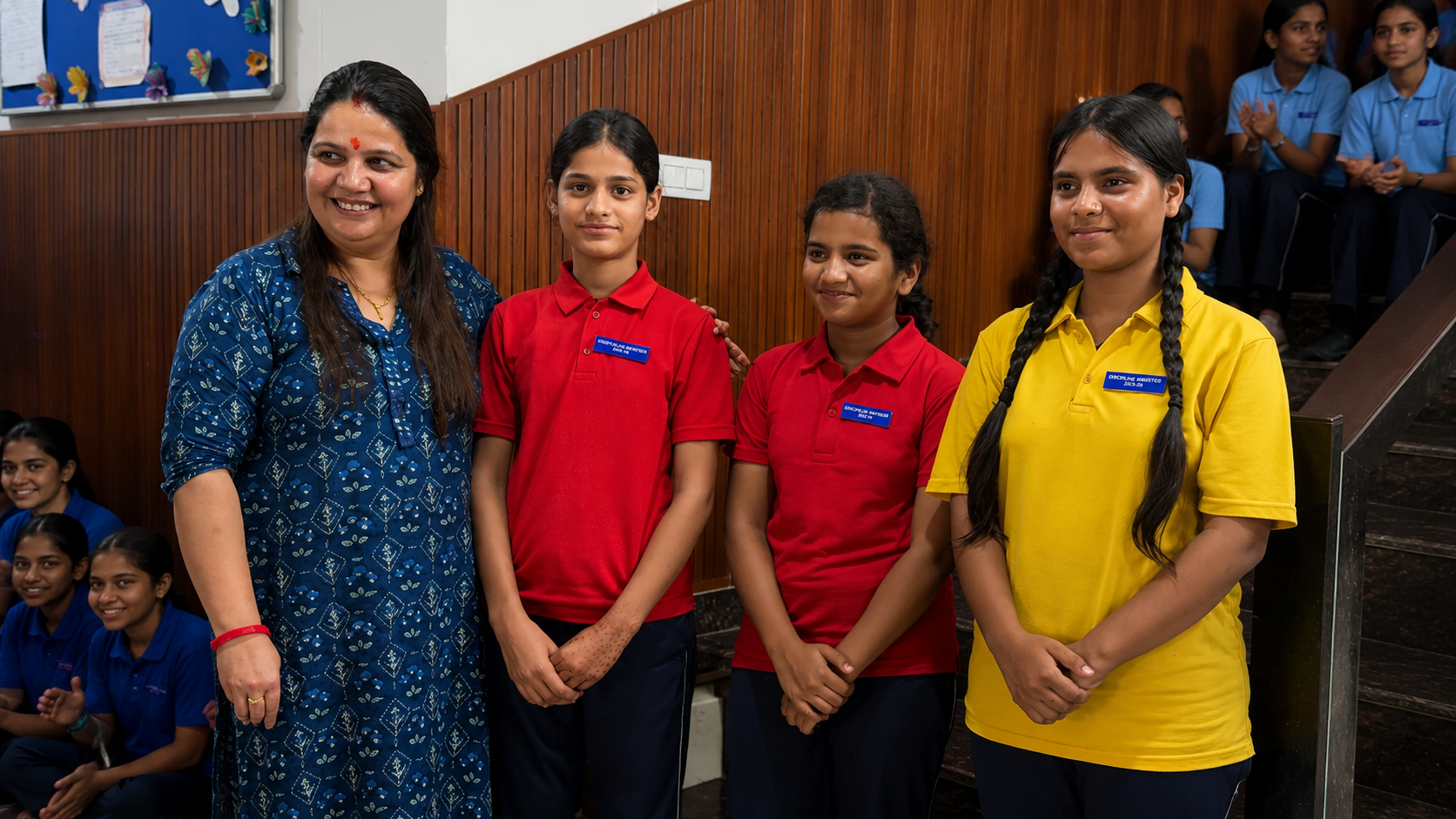
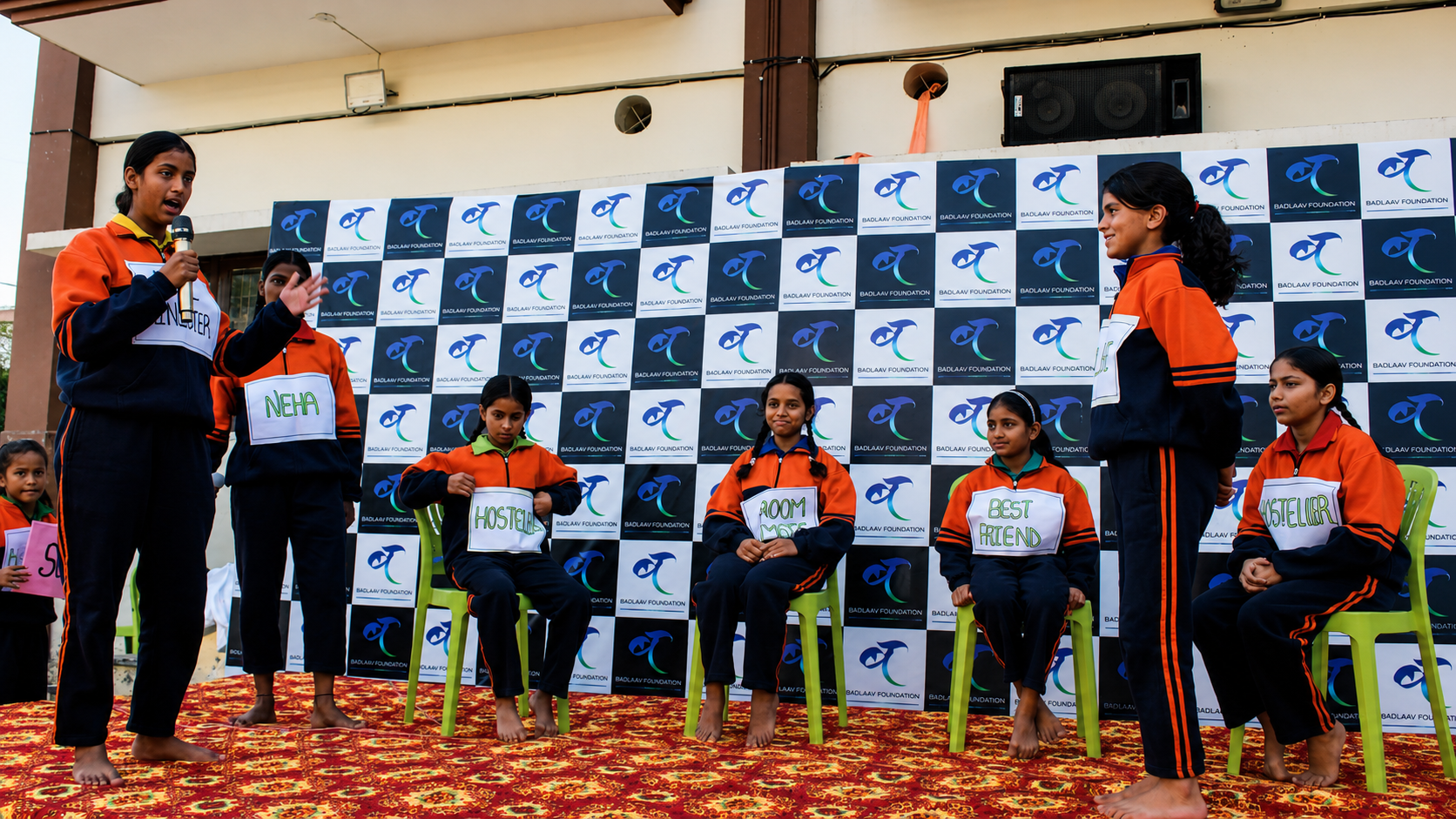
Three ministries came together for the first time to organise something no shelter home in Dehradun had done before: a full-day awareness event for the rest of the CCI, designed and run entirely by the children themselves. The Health Ministry, the Legal Ministry, and the Discipline Ministry each took ownership of one theme and built their own experience around it.
There were no trophies. No scoreboards. The goal was not to win. It was to inform, to engage, and to make the experience joyful enough that the learning actually landed. The ministries used skits, games, and interactive activities to raise awareness while making sure that every child in the audience was having fun.
Health Ministry
Skits and games around daily health practices, hygiene habits, and self-care. Practical knowledge delivered with energy and humour.
Legal Ministry
What every child is entitled to, and what every child owes to the people around her. Rights without responsibilities is an incomplete idea. The Legal Ministry taught both.
Discipline Ministry
The why behind the rules of the CCI and the value of structure. Not compliance for its own sake, but understanding that rules exist to make shared life possible.
Story · Meenakshi · Cultural Minister
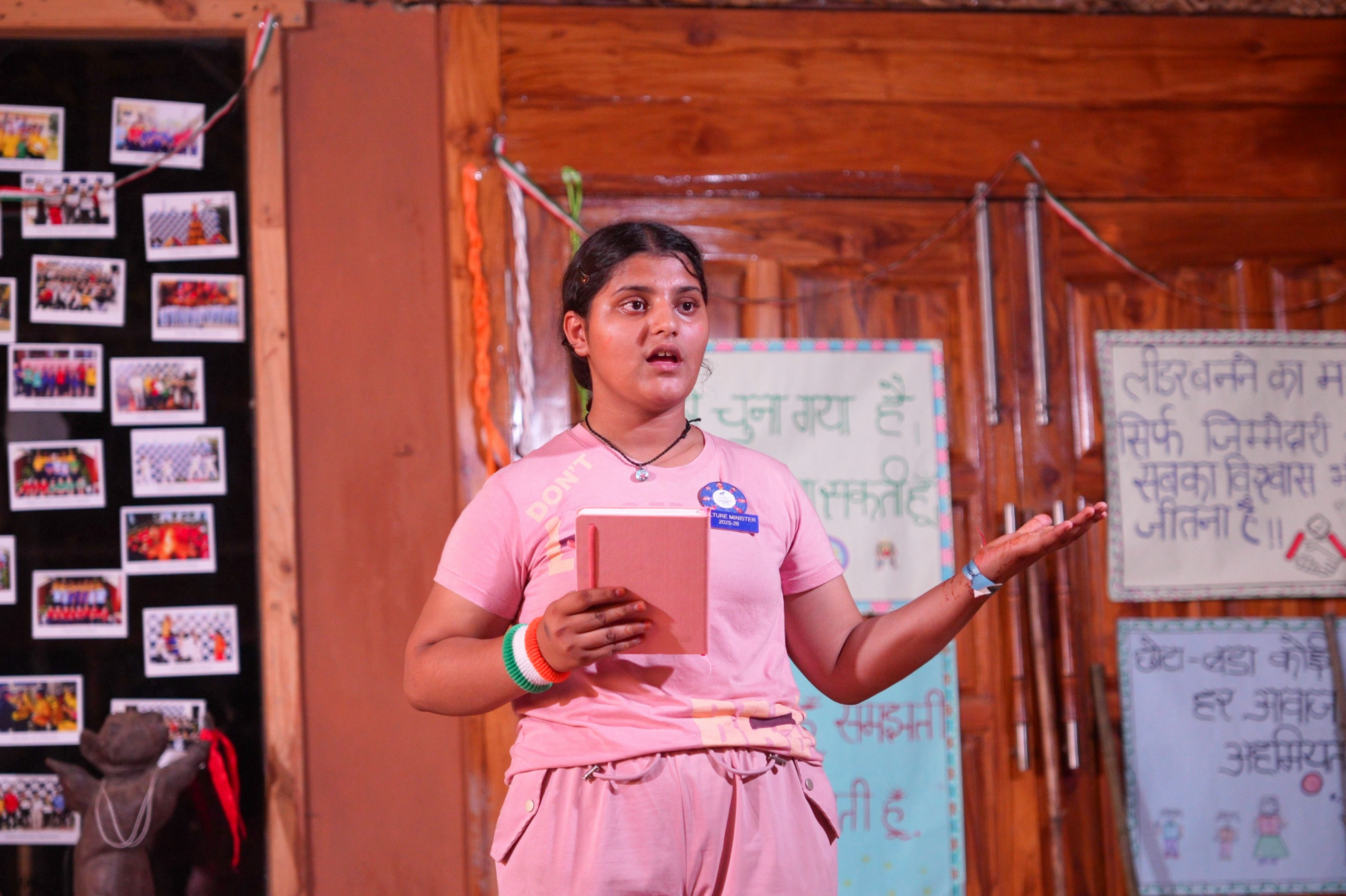
When Meenakshi arrived at the shelter home, she was quiet in the way that some children are quiet: not from peace, but from uncertainty. She participated when directly included, said very little about what she thought, and gave no visible sign of what was possible for her.
Her entry point was the Arts and Craft Club. From there she moved into Music, into cultural events, into the orbit of the Bal Sabha. When elections came for the student council, she stood for Cultural Ministry.
“The staff used to plan the festivals themselves. Now they wait for Meenakshi. She already has the whole thing mapped out in her head.”
She won. Today, Meenakshi plans every cultural event at the CCI: Diwali themes, competition formats, birthday celebrations for 250+ children. She coordinates with staff, directs volunteers, and runs the Annual Cultural Competition from start to finish.
The staff who once organised everything without her now wait for her to take charge. That is not a compliment to her talent. That is the system working exactly as designed.
The same girl who sat at the edges now owns the room. She did not receive that confidence. She built it. Dagdya gave her the structure to build it in.
Dagdya in numbers
Student leaders in the council
Elected. Accountable. Running real ministries. Not a simulation, a real governance structure.
Ministerial verticals
Education, Discipline, Sports, Health, Legal, Culture, Technology. Every dimension of life in the CCI, represented.
Houses Named after our state women
Gaura Devi. Bachendri Pal. Tilu Rauteli. Basanti Bisht. Four legacies. Four houses. One identity.
Annual student-led events
Sports. Literary. Cultural. Awareness Mela. Designed and run by the children who elected each other to lead them.
See the full system
The Bal Sabha builds leaders. CARE builds skills. Camp Infinity builds worldview. Together they are Badlaav’s answer to the question of what it takes to produce a young person who is ready, not just safe.